Executive Summary
Personalised financial advice can deliver significant benefits. Accurately quantifying those benefits, though, has historically proved a challenge for advisers and investors.
In this latest study, we build on our Adviser’s Alpha research by exploring the value of financial advice to individual investors based in the UK.
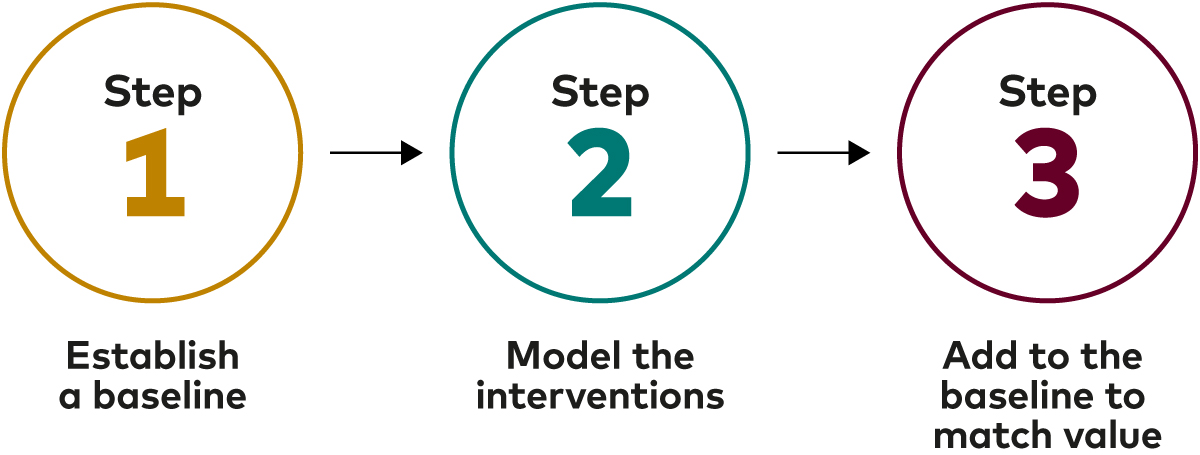
We begin by expanding our previous framework to help advisers identify the sources of advice value with clients, followed by a process for measuring the value of specific advice interventions at the individual level.
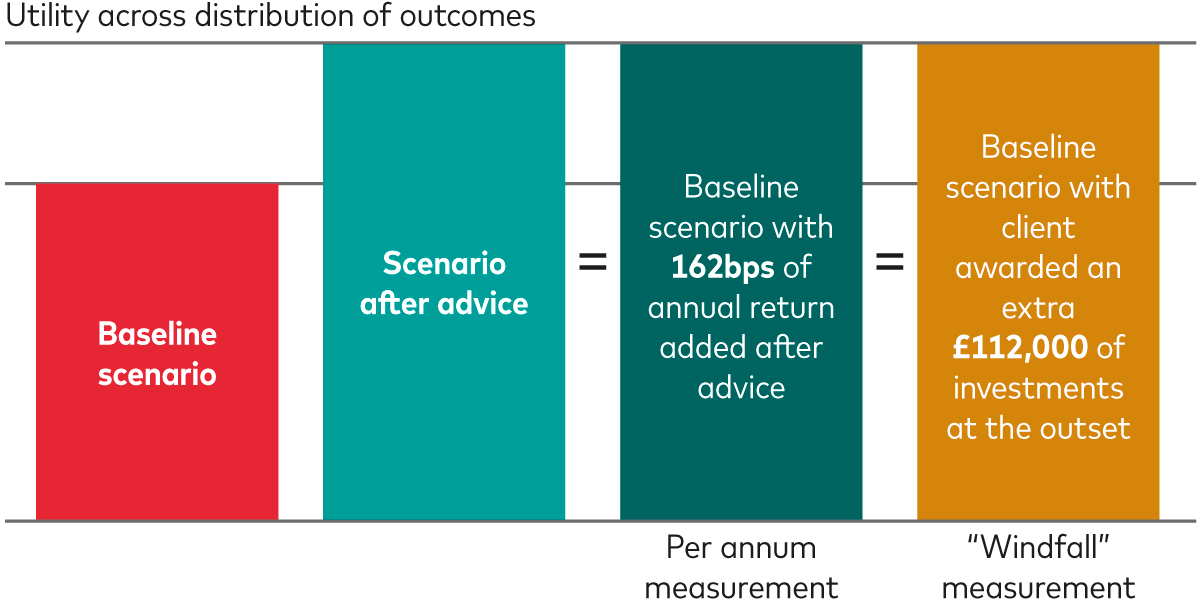
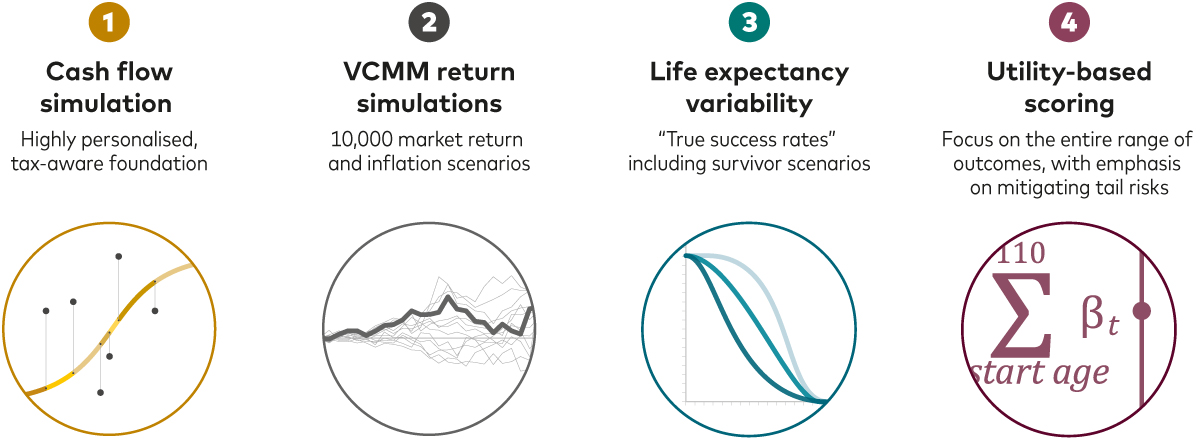
As part of this process, we introduce our new model, the Vanguard Financial Advice Model (VFAM). Originally developed for use in the US, VFAM has been re-calibrated for the UK investing landscape. VFAM enables us to quantify the incremental value that advice can provide to an individual investor’s financial plan relative to their current strategy.
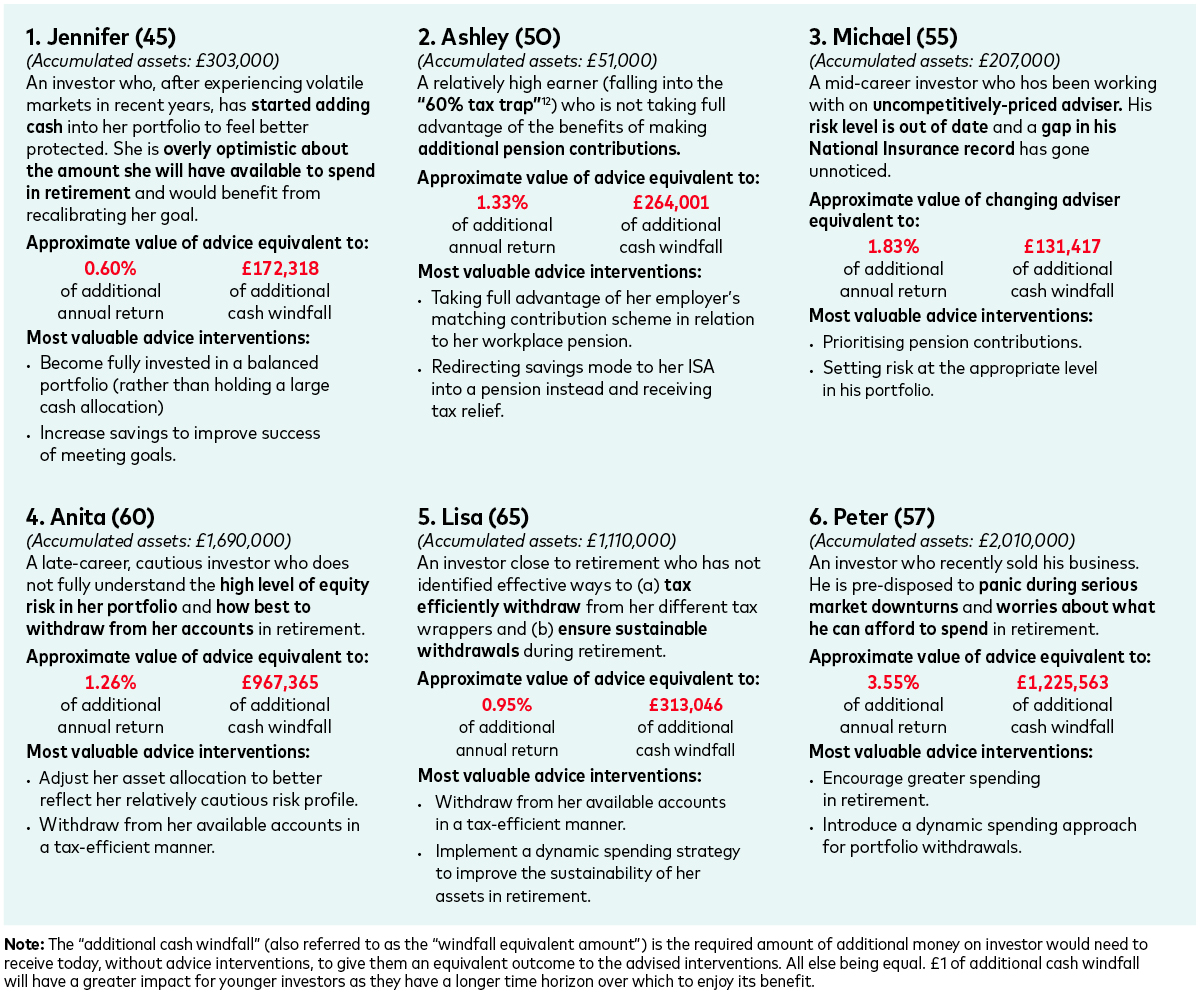
To demonstrate the new model and process, we present six case studies that illustrate how advisers can quantify the value their services generate for individual clients based in the UK, using a range of typical advice interventions.
Across the case studies, we see the total value of advice, net of fees, ranging from 60 basis points (bps) to 355 bps annually per individual. The actual values of these interventions to an investor could be well above or below this range based on their personal circumstances and the specific advice interventions considered.
Introduction
Understanding the monetary value of advice interventions at the individual level can help advisers more easily articulate their value to existing and prospective clients.
By putting a number on the value of advice, financial advisers can surface and focus on the highest-value advice interventions – which can help demonstrate value to clients and, in turn, retain and attract more business. Unadvised investors can learn whether financial advice is right for them. Advised investors can benefit from knowing how advice adds value beyond the fees they pay their advisers. Finally, as the number of hybrid and robo/digital advisory services grows, the financial advice industry can get a better understanding of the different cost-to-serve models according to the value of the services they provide.
Sources of value
Financial advice can provide value in a multitude of ways, whether delivered by human advisers, digital platforms or investment product solutions.
Some examples of services include:
- Being a source of professional expertise and judgment for investors when they need it.
- Helping investors uncover their goals and setting up roadmaps for meeting those goals.
- Managing portfolios to maximise potential returns while controlling for risk and minimising taxes.
- Preparing investors to deal with the possibility of unpredictable outcomes that may have low probability but catastrophic effects, such as early death.
- Keeping on top of an investor’s changing life needs and making sure that plans stay on course.
- Saving investors time by performing resource-intensive tasks on their behalf.
- Offering emotional support and guidance to help investors stay motivated and provide peace of mind.
The value of advice framework
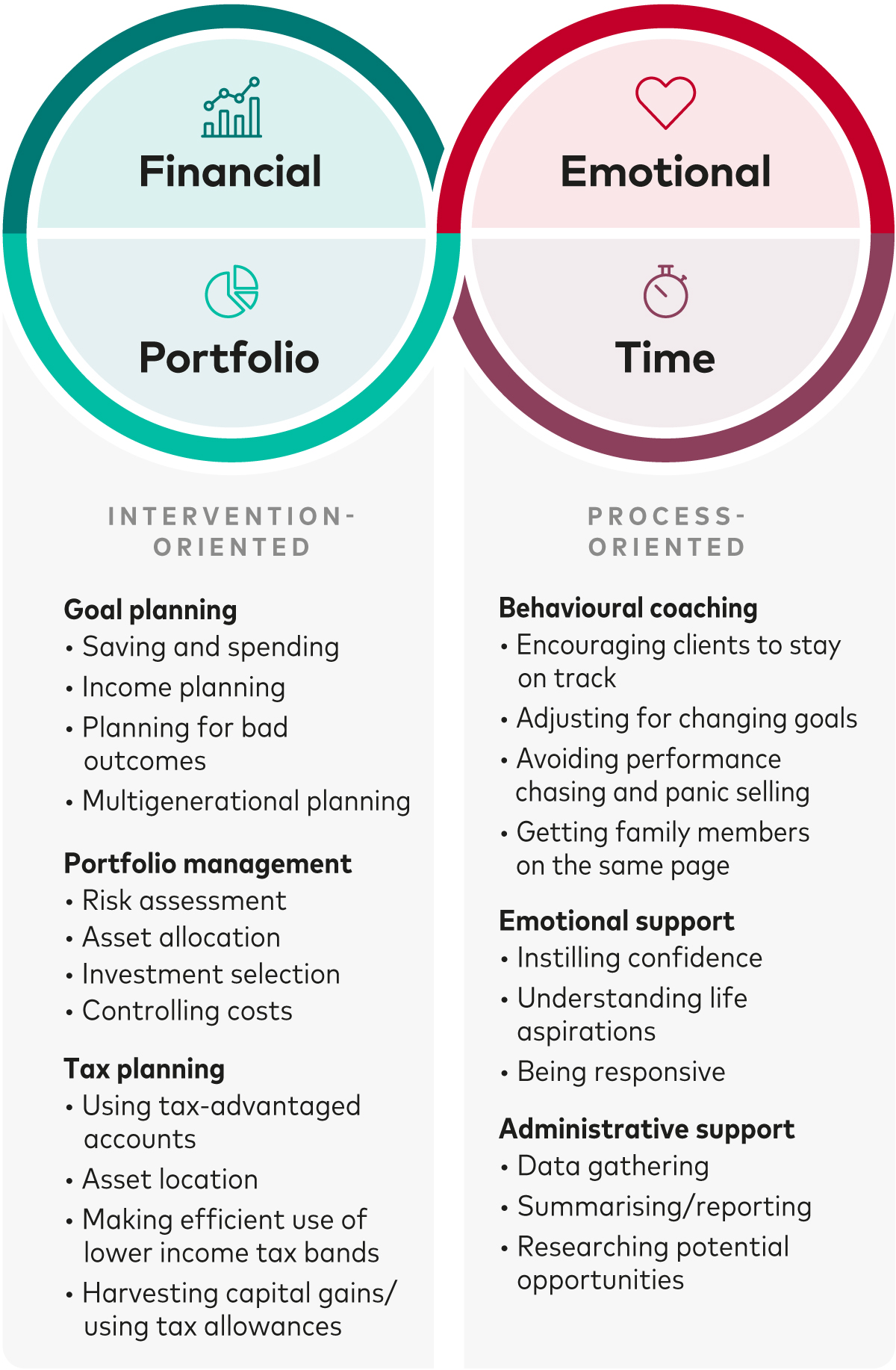
Previously, Vanguard proposed a three-part framework for understanding the types of value that advisers can provide investors:
Financial value. Ultimately, investment returns are only important in the service of helping investors achieve specific financial objectives. Advisers can engage in a myriad of financial planning strategies to ensure that investors are prepared to meet the financial challenges that they and their families may face.
Portfolio value. This type of value comes from building a well-diversified portfolio that generates better after-tax risk-adjusted returns net of all fees, suitably matched to the client’s risk tolerance.
Emotional value. This type of value comes from helping investors achieve financial well-being, or peace of mind.
For this discussion, we add a fourth type of value to this model:
Time value. This type of value comes from the simple fact that advice providers perform tasks that individual investors might otherwise not have the time, willingness or ability to perform on their own.